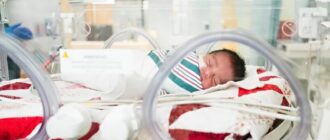
👶 When Manal and Mirhi came into this world, doctors warned their parents that the chances of survival were slim. The twin girls were born fused at the head, sharing bone and blood vessels in a way that made separation nearly impossible. For three years, their mother and father lived with both hope and fear, never knowing if their daughters would see another day. Then, against all odds, a team of doctors decided to attempt the impossible. Fourteen hours in surgery changed everything—and what their family can finally do now brings tears to the eyes. 💖

Manal and Mirhi’s story began in Pakistan, where their birth shocked both their family and the medical community. The twins were born with an extremely rare condition—conjoined at the head, sharing not only bone but also a complex vascular system.
Such births are estimated to occur once in every 60,000 deliveries, but survival into childhood is even rarer. For years, their parents faced a heartbreaking reality: the girls were alive, but their future was deeply uncertain.

Every day, their mother looked at them with love and fear intertwined. “How can they live like this?” she would whisper. Their father, holding on to hope, prayed for a miracle.
That miracle came when the girls turned three. Doctors decided the time had finally come for a bold attempt—a surgical separation. Without it, the girls’ health would deteriorate as they grew. With it, they faced enormous risks, including the possibility that neither child would survive.
The family agreed. With tears and trembling hands, the parents entrusted their daughters to science and faith.

Manal and Mirhi were transferred to Ankara, Turkey, to the renowned Bilkent City Hospital. There, an international team of experts prepared for months, studying every detail of the girls’ anatomy. Using groundbreaking 3D modeling and mixed-reality technology, they created digital replicas of the twins’ skull and brain, allowing them to practice the delicate procedure step by step.
Finally, the day arrived.

The operation took place in two phases, with the final stage lasting more than 14 grueling hours. Surgeons had to carefully separate the girls’ shared membranes and blood vessels—any mistake could have been fatal. Once the separation was complete, they reconstructed each child’s skull using bone grafts and medical innovation.
When the last stitch was placed, an air of relief filled the operating room. The impossible had been achieved—the girls were finally two.
In the days that followed, hope turned into joy. Within a short time, Manal and Mirhi began to breathe on their own and respond to their surroundings. Doctors, though cautious, were amazed at their speed of recovery. “They are stronger than we imagined,” one surgeon said.

Today, the twins are undergoing rehabilitation. Step by step, they are learning to sit, move, and eventually walk as independent individuals. For their parents, the transformation feels nothing short of divine.
For the very first time, their mother can cradle one daughter in her left arm and the other in her right. Their father can kiss each forehead separately. The family, once burdened with fear, now looks toward a future filled with hope.
The world often speaks of miracles, but sometimes miracles are written with scalpels, technology, and unshakable human courage. Manal and Mirhi’s journey is living proof that where love and determination meet science, even the impossible becomes possible.