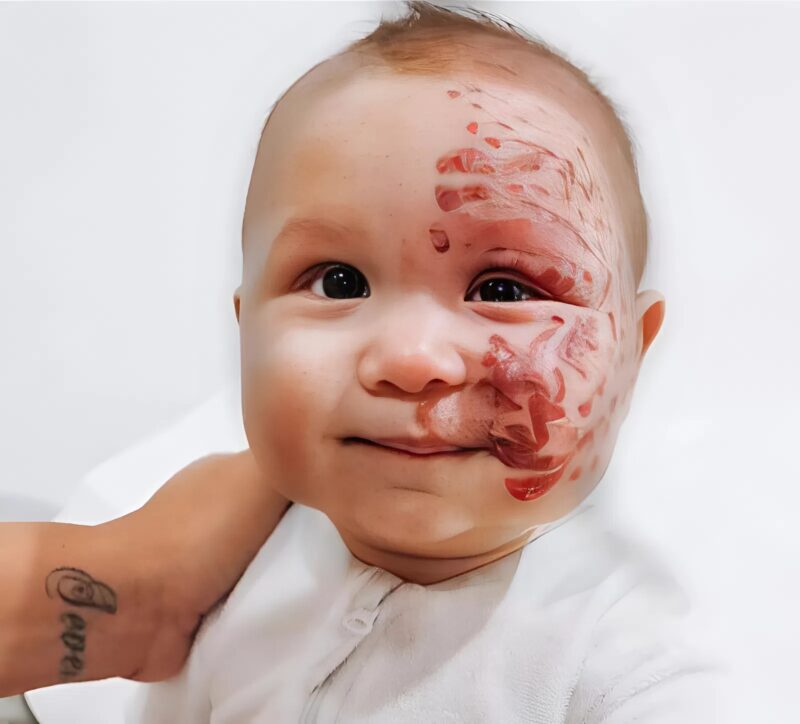
The first time I held Kingsley in my arms, I felt a rush of love so fierce it almost hurt. But mixed with that love was a quiet panic I couldn’t name. The nurses moved around us with unusual caution, whispering in voices meant to be discreet. I kept my eyes on my son’s tiny features—his soft lips, his perfect lashes—and then on the deep red stain spreading across one side of his face.
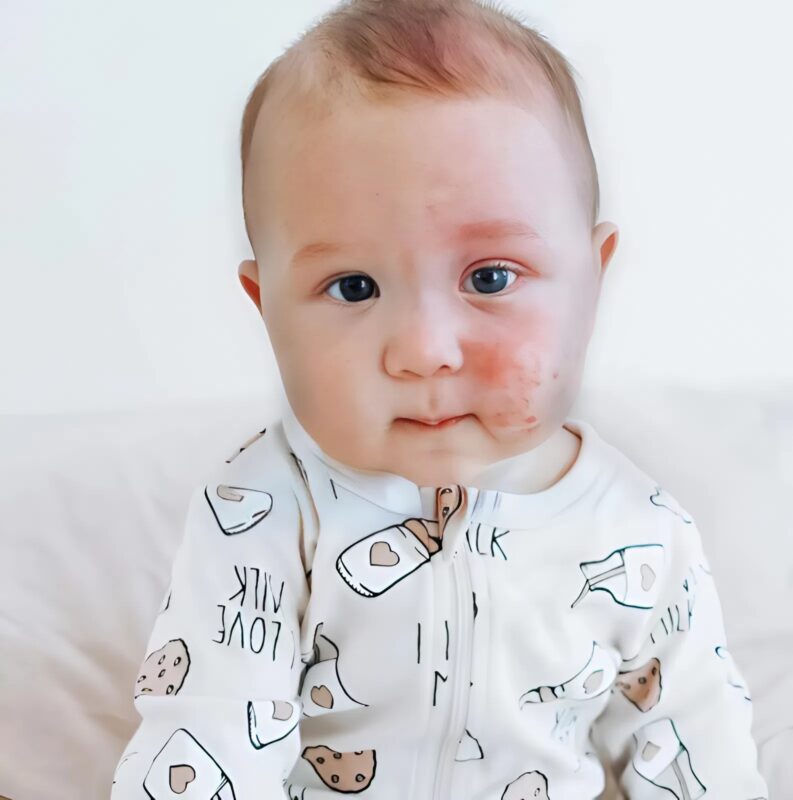
I told myself it was nothing more than a birth bruise, but the doctor’s expression said otherwise. When he finally spoke, his voice was low, careful, almost too gentle. Kingsley, he explained, had a port-wine stain, a vascular mark that could affect more than just his appearance. There were risks: pressure in the eye, potential nerve issues, even long-term damage if untreated. The words pressed down on me like a physical weight.
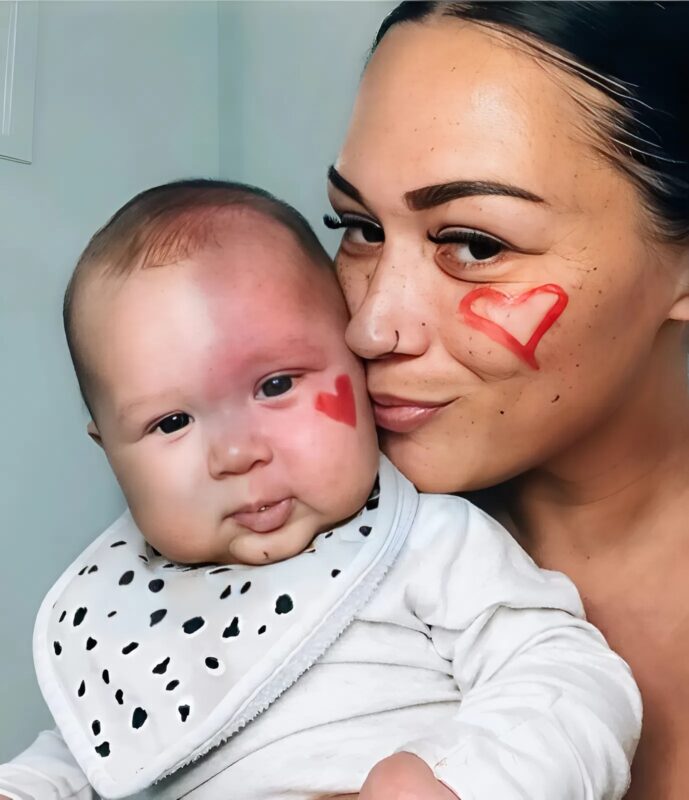
That night, after the hospital grew still, I watched my husband crumble in the dim light. He tried to stay strong, but tears slid down his cheeks anyway. We sat together, holding our newborn between us, terrified by the path ahead—one we had never imagined walking.
The following weeks blurred into a stressful routine of medical visits and anxious waiting. It felt as though Kingsley belonged more to the healthcare system than to us. His tiny life was constantly measured, tested, observed. I longed to simply enjoy him, to celebrate his little smiles and sleepy stretches, but fear clung to every moment.
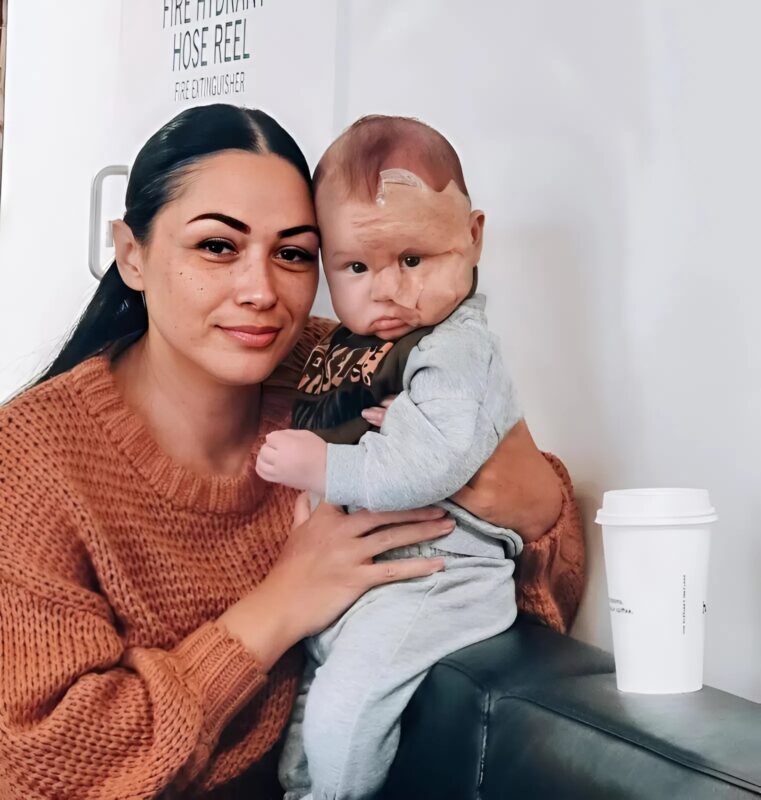
Then came the appointment that changed everything. The ophthalmologist told us Kingsley’s eye pressure had risen again. I watched my son blink up at the bright lights, unaware of how close he was to losing something precious. His small hand curled around my thumb, and in that instant, I made a silent vow: whatever it took to protect him, I would do it.
That promise led us to a terrifying decision—laser treatment. I hated the idea. The word “laser” didn’t belong anywhere near my newborn’s delicate skin. But doctor after doctor repeated the same message: early intervention could save his sight. After sleepless nights filled with fear and endless research, we said yes.
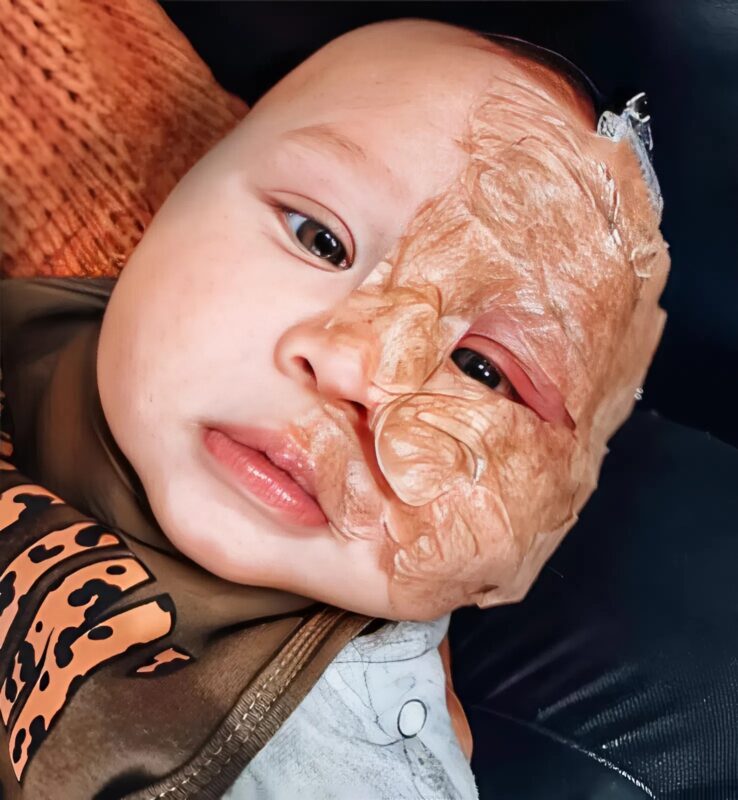
The first session shattered me. Kingsley cried for only seconds, but those seconds felt like knives. I held him afterwards, whispering apologies through my tears. A faint purple dot appeared on his cheek, proof of what he’d endured… because of a choice I had made.
To cope, I started sharing our story online, hoping to connect with parents who felt the same crushing loneliness. In the beginning, the kindness was overwhelming—messages of support, prayers, encouragement. But then came the cruel comments. People who didn’t know us judged me viciously, calling me vain, selfish, even accusing me of harming my own child.
I broke down. Their words sunk deeper than any medical fear ever had.
But in the middle of the hatred, something beautiful happened: strangers rose to defend me. Parents of children with similar conditions, adults who had lived with port-wine stains, people who understood what love-driven decisions looked like. One message stayed with me:
“You aren’t hurting him—you’re protecting his future.”
And Kingsley proved them right.
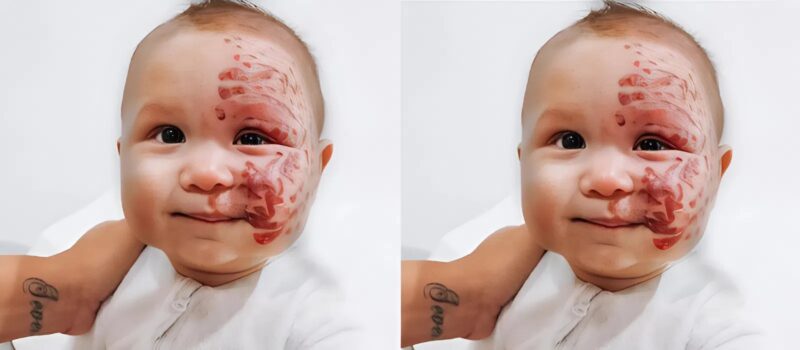
He handled every treatment with surprising strength. He laughed in waiting rooms, charmed the nurses, and stared at us with a calmness that felt wiser than his age. And then something extraordinary emerged. A soft golden shimmer appeared in his affected eye—not harmful, not painful, just… different. Unique. Beautiful.
Months later, doctors announced something they couldn’t scientifically explain: his optic nerve was improving. Not stabilizing—improving.
Kingsley wasn’t just overcoming his condition.
He was rewriting it.
And the birthmark I once feared became the very thing that helped save his sight.