Some nightmares begin quietly, hidden in the fabric of everyday life, offering no hint of the storm to come. For Sophie, her nightmare began when her little boy, just learning to walk, faced an invisible enemy.
Harrison arrived in May 2020, a child born into lockdown, a time defined by distance and uncertainty. His first year was cocooned from the usual childhood illnesses, shielded by circumstance and caution.
By July 2021, Harrison was thirteen months old, and that protection vanished. Two ordinary cold viruses, usually mild in children, struck him with an intensity no one could have foreseen.

Those viruses attacked not just his body, but his heart. What should have been a brief illness escalated into a life-threatening crisis. Harrison was rushed to Evelina London Children’s Hospital and admitted immediately into intensive care.
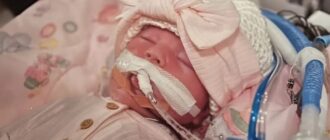
The rhythms of toddlerhood—laughter, play, simple routines—were replaced by machines, monitors, and the constant hum of alarms. Sophie’s days became measured in heartbeats and breathing tubes.

After a month in ICU, Harrison moved to a ward. Progress felt fragile but tangible. Doctors worked to assess the full impact of the illness, and eventually delivered the truth: Harrison had a congenital heart condition. The viruses hadn’t just made him sick—they had caused permanent damage.\

The diagnosis was crushing. What Sophie had endured was only the beginning. Yet Harrison improved enough to return home, heavily medicated, appearing outwardly like any other toddler. Sophie treasured each ordinary moment, each laugh, each tiny exploration, clinging to hope.
During the initial hospitalization, Sophie stayed at the Ronald McDonald Evelina London House, discovering a sanctuary she hadn’t realized she needed. The staff offered support without questions, creating calm amid chaos.

Months passed, Harrison seemed stable, and Sophie allowed herself to breathe. Life remained far from normal, but it felt survivable—until December.
Just before Christmas, Harrison’s condition took a sudden turn. No warning, no clear reason. He became critically ill, and scans revealed his heart had deteriorated. Harrison returned to ICU, with no clear end in sight.

Medications failed to stabilize him. The unthinkable happened: he was placed on the urgent heart transplant list. Days, weeks, and months became a blur of tests, monitors, and delicate changes.
Harrison faced challenge after challenge: sepsis, a severe fungal infection, and two cardiac arrests. Each revival brought physical and emotional scars. Sophie learned how quickly hope could shatter and rebuild.

Throughout it all, the Ronald McDonald Evelina London House became more than a place to stay. It became home. Sophie never had to be far from her son. Her mother, Helen, joined the rhythm of survival, alternating rest so each could endure.
Harrison’s kidneys failed after his second cardiac arrest, requiring dialysis. His lungs suffered from prolonged ventilator use. For a time, it seemed his small body had forgotten how to function on its own, and Sophie watched helplessly as machines sustained life.
Slowly, small victories emerged. His kidneys recovered. His lungs improved. Harrison was weaned off sedation. Every gesture—a wave, a shake of the head, a high-five—felt miraculous. He was still fighting.

For parents in ICU, sleep is impossible. The House made rest and proximity possible, relieving financial, emotional, and logistical burdens. Meals from volunteers, quiet understanding from staff, and a sense of normalcy made endurance achievable.
Over time, the House stopped feeling temporary. Shared kitchens, quiet conversations, and mutual understanding with other families created a language of survival. Sophie experienced her darkest nightmare but discovered unexpected solace in support, closeness, and the ability to be present.
The Ronald McDonald Evelina London House didn’t change Harrison’s medical reality—but it transformed Sophie’s capacity to endure. It offered strength when there was none, stability when the world threatened to collapse.

Harrison remained in intensive care for six months. Every day brought uncertainty. Sophie learned to focus only on the present: his eyes, his hands, his tiny signals of awareness. Every small improvement became a cause for quiet celebration.
Gratitude became integral to Sophie’s journey. Proximity was essential. The House allowed her to be a mother first—not a visitor, not a commuter, but a constant presence.

Harrison’s story continues. His future remains uncertain. But he has fought with unimaginable strength, and Sophie has remained steadfast, lifted by a place that refused to let her fall.
In the longest months of waiting, the House provided a lifeline, proving that support, closeness, and endurance can make all the difference.