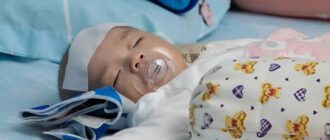
When the twin girls entered the world, everyone in the delivery room immediately understood that their lives would be dramatically different from most newborns.
The sisters were conjoined from the chest down to the abdomen, their small bodies fused together in a way that made even the simplest movements nearly impossible. Sitting upright, rolling to the side, or lying comfortably required enormous effort. Every breath, every turn of the head, every attempt to stretch had to be shared between them.
For their parents, Jill and Michael, the first months were filled with both joy and fear. They adored their daughters, Anna and Hope, yet lived each day with uncertainty, unsure whether a separation operation would ever be safe for them. The girls shared a diaphragm and a large liver, and even their hearts were connected through a thick, crucial blood vessel. This connection worried doctors most, as they could not predict whether the surgery would be possible without risking one or both lives.

The newborn sisters spent their earliest days in the hospital, lying side-by-side, their cheeks touching, their shoulders pressed together. Nurses often said that the girls seemed to move as one — if one stirred or opened her eyes, the other woke moments later, almost as if they shared a single rhythm. Holding them required incredible care; their parents had to lift them together, supporting their fused chest and abdomen gently with both arms.

As the girls grew past their first year, medical teams finally believed the time had come. A group of seventy-five specialists — surgeons, anesthesiologists, nurses and imaging experts — prepared for months. They used 3D models, ran dozens of scans, and planned the operation down to the smallest detail. Every step required precision, and every decision carried enormous responsibility.
On January 13, 2018, the surgery began. What followed was an intense seven-hour procedure that demanded complete coordination from everyone involved. The surgeons separated the shared liver, rebuilt two diaphragms, disconnected the vessel linking their hearts, and constructed individual chest walls and abdominal structures for each sister. It was an extraordinary medical challenge — the kind of intervention that required skill, patience, and a steady belief in the impossible.

Then came the moment no one in the room would ever forget. When the doctors gently placed Anna and Hope on two separate operating tables, an almost sacred quiet filled the room. For the first time, the sisters lay apart. Two bodies. Two lives. Two little girls finally given the chance to grow as individuals.
In the months following the operation, both children made remarkable progress. Anna was able to return home first, followed shortly by her sister. Despite the difficult start in life, both girls thrived. Their parents watched with emotion as they took their first independent steps, learned to play separately and together, and experienced everyday childhood moments that once seemed impossible.

Today, Anna and Hope live like any other children their age. They laugh loudly, bicker over toys, chase each other through the house, and wrap their arms around one another in spontaneous hugs — now no longer out of necessity, but out of genuine sisterly affection. Their mother says she never stops appreciating the miracle she witnesses each day: two daughters who began life bound together now waking up each morning free to grow into their own unique selves.
Their story is not just about medical triumph. It is about resilience, hope, and the power of a family who never stopped believing that their daughters deserved the chance to live their own lives.