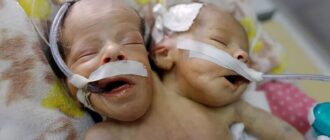
💔 When Tatiana and Krista entered the world in 2006, doctors whispered their doubts. How could two tiny babies, fused at the head and sharing a part of their brain, survive even a few days?
Yet here they are, 18 years later, defying science and expectations alike. Their lives are filled with extraordinary challenges, but also with laughter, resilience, and a bond unlike any other on earth. 💖
Eighteen years ago, in a Vancouver hospital room, a hush fell over the delivery ward. Nurses and doctors leaned in, eyes wide, as two little girls were born in a way so rare it occurs in fewer than one case out of 2.5 million births.
Tatiana and Krista Hogan came into the world conjoined at the head, their tiny skulls fused together. Even more astonishing, they shared not just bone but a portion of their brain—the thalamus, the part that processes sensory signals.

The odds were stacked heavily against them. The medical term for their condition, “craniopagus,” is one of the rarest and most complex forms of conjoined twins. Survival rates are low, and most such infants live only hours or days.
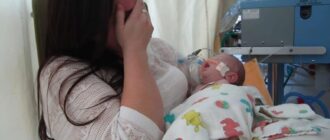
For Tatiana and Krista, the prognosis seemed bleak. Yet their mother held them close and whispered a promise: “You are my miracles. You will stay.”
From their earliest moments, the Hogan twins revealed something extraordinary. Because of their shared thalamus, they could experience the world in ways no one else could. If one felt a tickle, the other laughed.
If one sipped juice, the other tasted it too. Doctors quickly realized they weren’t simply conjoined twins—they were living, breathing evidence of how interconnected two human minds could be.

Today, Tatiana and Krista are 18 years old. They live with their mother, grandmother, and several siblings in a modest home in Vernon, British Columbia. To an outsider, it may look like any busy, loving family. But inside that home beats a heart of courage and quiet strength.
Despite their neurological connection, Tatiana and Krista are two very distinct individuals. Tatiana is impulsive, outspoken, and adventurous. Krista is calmer, more reflective, with a quick wit that surprises strangers. They bicker, tease, and laugh like any sisters—but their connection is unbreakable in a way most siblings can’t imagine.
Over the years, scientists and neurologists have studied the Hogan twins with fascination.
Their shared thalamus provides clues to some of the greatest mysteries of the human mind: how we perceive the world, how consciousness flows, and whether two people can truly “feel” as one. The twins have even been described as a living “window” into the brain’s hidden potential.

But their lives aren’t defined only by wonder. There are harsh realities, too. Both sisters struggle with serious health problems. Tatiana’s heart is weak, a constant worry for the family.
Krista has seizures and epilepsy that require ongoing care. Their physical mobility is limited; they move with the help of a specially designed wheelchair that requires careful coordination. They also face developmental delays and attend a customized education program to support their learning.
Yet none of these challenges has stolen their joy. The girls are known in their community for their bright smiles and chatter. They love cartoons, video games, and music. They have their own favorite foods, hobbies, and even crushes—proof that despite sharing part of a brain, their personalities are distinct and vibrant.

There was a time when doctors considered the possibility of separating them. But the risks were overwhelming. Because their brains are intertwined, such a surgery would have been fatal to both. Their mother chose love over fear and refused the operation. Today, looking at her daughters, she knows it was the right decision.
Their bond has become their strength. When one feels pain, the other offers comfort. When one laughs, the sound rings doubly bright. They have developed a form of silent communication—a glance, a twitch of the lips—and the other knows exactly what’s being said. In a world where loneliness often feels inevitable, Tatiana and Krista embody a kind of closeness most of us can only dream of.

For the people around them, the Hogan sisters are more than a medical marvel. They are a daily reminder of resilience, hope, and the power of family. Their grandmother calls them “our double heartbeat.” Neighbors describe them as “sunshine on wheels.” And for those who have followed their story since birth, they represent a miracle—living proof that love, care, and courage can defy even the bleakest odds.
As they step into adulthood, Tatiana and Krista continue to inspire researchers, teachers, and ordinary people alike. They remind us that life’s value isn’t measured by ease or perfection, but by connection, laughter, and the courage to keep going.
They may share a brain, but they have two spirits, two hearts, and one extraordinary journey.