When my wife passed away, I believed the hardest moment of my life had already arrived. I was wrong. That moment was only the beginning of a silence I did not know how to survive.
We had been together for more than four decades. She was the center of my everyday world—the one who reminded me to eat when I forgot, who laughed at my worst jokes, who made even difficult days feel bearable. After her funeral, I returned to a house that still carried her presence in every corner. Her chair remained slightly turned toward the window. Her teacup stayed in the cupboard exactly where she left it. Even the air seemed to wait for her voice.

My son and his wife moved in shortly after. At first, I thought it was kindness. They said I should not be alone, that family should stay together in times of grief. I agreed, grateful and exhausted. I wanted to believe I was not a burden, that love would continue in another form.
But grief changes people in ways that are not always gentle.
Weeks passed, and I began to notice small shifts. Conversations became shorter. My presence seemed to interrupt their routines. My son stopped asking how I felt. My daughter-in-law no longer greeted me with warmth, only necessity. I told myself it was stress, adjustment, the pressure of sharing a home. I tried to stay quiet, to be invisible, to make life easier for them.
Then the coldness grew sharper.
Meals were eaten without me being invited. Doors closed more firmly than before. My questions were answered with impatience. I would sit in the living room, listening to their voices from another room, realizing I was no longer part of the conversation. I became someone they tolerated rather than someone they cared for.

One evening, I overheard them speaking when they thought I was asleep. My son’s voice carried frustration, saying that my presence was limiting their freedom. My daughter-in-law agreed, adding that the house felt crowded and that my needs were “too much.” I lay still in the dark, staring at the ceiling, feeling something inside me quietly collapse.
After that night, something changed in me too. I stopped expecting kindness. I stopped waiting for inclusion. I began preparing myself for whatever came next.
It came sooner than I expected.
On a rainy afternoon, my son entered my room without knocking. His expression was serious, distant, as if he had rehearsed what he was about to say. My daughter-in-law stood behind him, avoiding my eyes.
“We think it is better if you move out,” he said.
For a moment, I did not understand the meaning of his words. I asked him to repeat them. He did, this time more firmly. He explained that they needed space, that the arrangement was no longer working, that I would be better “somewhere else.”
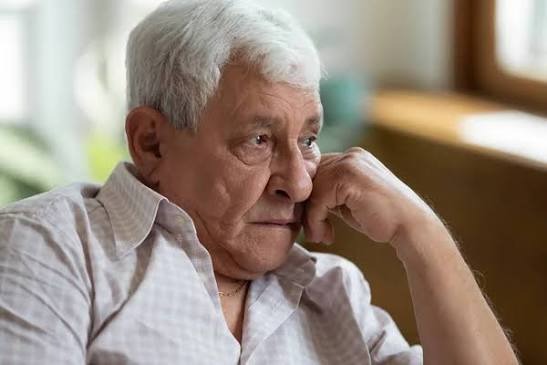
I felt as if the floor had shifted beneath me. This was the home I had built, the place where my wife and I had raised our child, where memories were carved into every wall. I looked at him, searching for hesitation, regret, anything that suggested he was still my son in that moment. There was none.
I did not argue. I did not shout. Something inside me had gone too quiet for anger. I simply nodded and stood up.
I packed slowly. A few clothes, a few personal items, nothing that could contain an entire life. Each object I touched felt heavier than it should have. Every step through the house felt like walking through a museum of my own past.
When I reached the doorway, I paused. I looked back at the rooms where laughter once lived, where my wife once moved like light through the days. For a brief moment, I thought I might be called back. That someone might stop me. No one did.
I stepped outside.

The air was cold and sharp. Rain fell steadily, soaking the pavement and blurring the outlines of the world I was leaving behind. I stood there for a moment, holding my small bag, realizing I had become a stranger to my own family.
Then I walked forward, not knowing where I would go, only knowing I could not stay.
Behind me, the door closed. And with it, a chapter of my life ended in silence.