# After the embryo transfer, my doctor decided to perform one more ultrasound, but what appeared on the screen left us completely speechless. 😢💔
I had imagined my pregnancy would end with a beautiful, peaceful delivery. After everything my husband and I had gone through to have a baby, I wanted nothing more than to hold our little miracle in my arms. ❤️
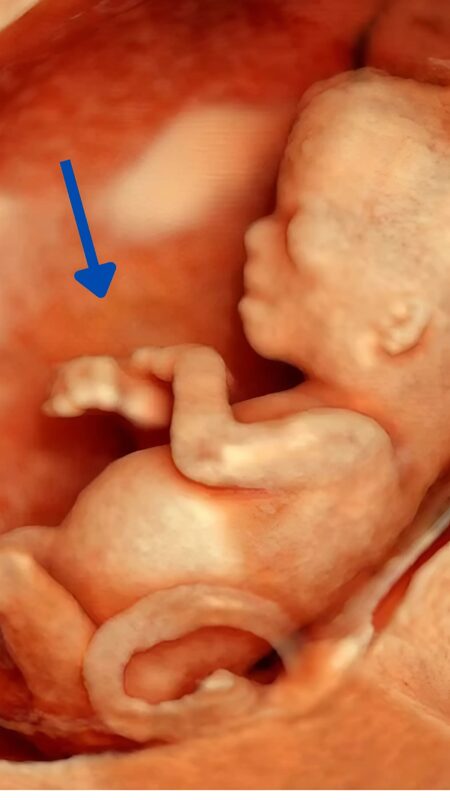
My journey had not been easy. We had struggled with infertility for years, experienced heartbreaking disappointments, and finally celebrated the day our embryo transfer was successful. When the pregnancy test came back positive, I cried so hard that my husband had to hold me for several minutes. We were finally going to become parents. 🥹
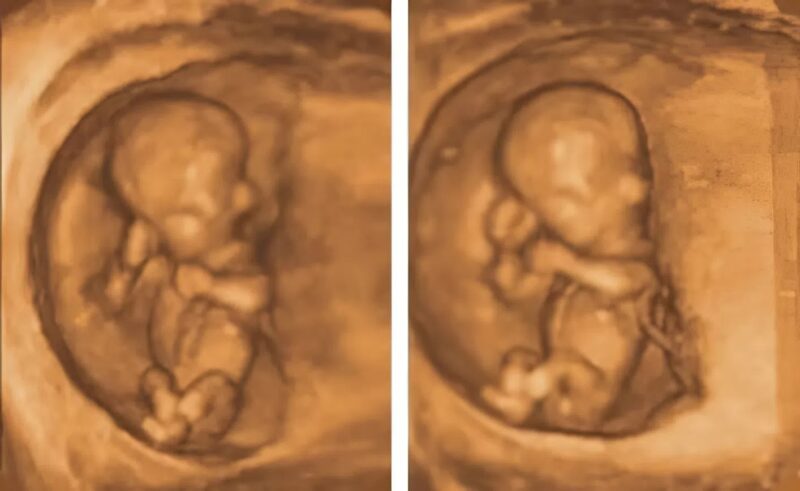
Now, at 36 weeks pregnant, I was getting closer to meeting our baby. Everything seemed to be going well, except for one unexpected detail: our little one was lying in a breech position, with the head pointing upward instead of downward.
During my appointment, the doctor carefully examined the ultrasound images and explained that the baby had not turned into the ideal position for a vaginal delivery.
«Your baby is healthy, but we need to discuss the position,» he explained gently. «There may still be an opportunity to turn the baby from the outside. If it works and there are no other complications, a natural birth may be possible.»
I immediately became interested.
«Does that mean I might not need a C-section?» I asked.
«Possibly,» he replied. «We can consider a procedure called external cephalic version. It involves applying carefully controlled pressure to your abdomen to encourage the baby to turn head-down.»
I was nervous, but the possibility of giving birth naturally made me hopeful. My husband squeezed my hand and whispered, «Whatever happens, the most important thing is that both of you are safe.» ❤️
A few days later, I returned to the hospital for the procedure. Before starting, the medical team performed an ultrasound to check the baby’s position, the placenta, and the amount of amniotic fluid. They also monitored the baby’s heartbeat.
Everything initially appeared reassuring.
The doctor explained that the procedure could sometimes cause temporary changes in the baby’s heartbeat. He also warned me that, although uncommon, complications such as placental separation or umbilical cord compression could occur.
I signed the necessary consent forms, took a deep breath, and lay down.
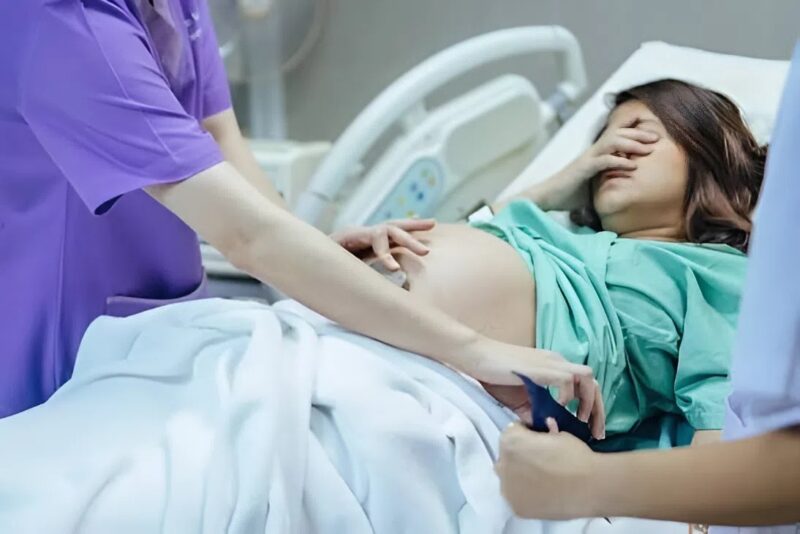
At first, everything seemed normal. The doctor gently placed his hands on my abdomen and began attempting to guide the baby into a head-down position.
I felt uncomfortable pressure, but I tried to remain calm.
Then something happened.
The doctor suddenly stopped.
«Wait a moment,» he said.
His expression changed. He immediately removed his hands and looked toward the monitor.
«What is it?» I asked anxiously.
Nobody answered immediately.
A nurse checked the monitoring equipment, while another member of the team called for additional assistance.
The baby’s heartbeat, which had been steady moments earlier, had suddenly dropped significantly.
My heart began racing.
«Please tell me my baby is okay!» I cried.
The doctor explained that the umbilical cord might have become compressed during the turning attempt. The baby’s heartbeat had slowed because the blood and oxygen supply could temporarily be affected.
But there was another concern.
The ultrasound suggested that the placenta might have started separating from the uterine wall. This is called placental abruption, a serious complication that can reduce the baby’s oxygen supply and sometimes cause dangerous bleeding.
The doctor explained that excessive pressure during an external turning attempt can contribute to complications, although they could not immediately determine exactly what had happened.
The procedure was stopped. The team began urgent monitoring and assessment.
I was terrified.
My husband arrived in the room after hearing that something had gone wrong. When he saw my face, he immediately understood that this was not an ordinary appointment.
«Is our baby going to survive?» he asked, his voice trembling.
The doctor looked directly at us.
«We cannot safely wait and see. The baby’s heartbeat is not recovering as we would hope, and we are concerned about the placenta. We need to deliver the baby urgently by emergency C-section.»
I started crying.
Only moments earlier, I had been dreaming about a natural delivery. Now I was being prepared for emergency surgery, terrified that our long-awaited child might not survive.
My husband kissed my forehead.
«Stay strong. Our little miracle is waiting for us,» he whispered. 😭❤️
Within minutes, I was taken to the operating room. The medical team worked quickly, and I could hear instructions being exchanged around me.
I kept repeating the same words in my head: Please let my baby be okay.
Then, suddenly, I heard a cry.
A tiny, beautiful cry.
«Your baby is here!» someone announced.
I began sobbing uncontrollably.
Our little girl had been delivered safely. The doctors immediately examined her because of the earlier heartbeat problems, but she began breathing on her own. She was taken for additional monitoring in the neonatal unit.
When my husband finally saw her, he covered his face with his hands and cried.
A few hours later, the doctor came to explain what had happened. He told us that the baby’s heartbeat had slowed during the turning attempt, possibly because of umbilical cord compression, and that signs of placental separation had made an emergency delivery necessary.
He also explained that the exact cause of the complications would need further assessment.
I looked at my daughter sleeping peacefully and held her tiny hand.
We had spent years waiting for this moment. We had dreamed of a perfect delivery, but our story had taken a frightening turn.
And yet, when I finally heard her cry, I understood something I would never forget: the way a child enters the world matters far less than having the chance to welcome that child safely.
Our little miracle was finally in our arms. ❤️👶
**Have you ever experienced an unexpected complication during pregnancy or childbirth? Would you have agreed to an external cephalic version, knowing that it carries certain risks?** 💬