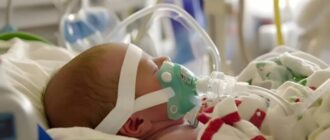
I was always warned never to let my newborn near our cat, but I followed my heart, and what happened next amazed everyone.
I had always believed that the bond between a baby and an animal could be something truly beautiful. ❤️🐱 When I brought my newborn daughter, Lily, home from the hospital, our orange cat, Oliver, was waiting for us by the front door. He had been part of our family for five years, and I couldn’t imagine treating him like a stranger just because our lives had changed.
However, everyone around me had a different opinion. 😟
“Please, don’t let that cat anywhere near the baby,” my mother warned me. “Newborns are fragile, and you never know what an animal might do.”
My husband agreed that we should be careful. Even our neighbors offered frightening stories about pets and babies. I listened to every warning, but deep inside, I felt that Oliver deserved a chance to get used to his new little sister.
“He has always been gentle,” I insisted. “I’ll supervise them. Nothing bad will happen.”
Those words would haunt me for weeks. 💔
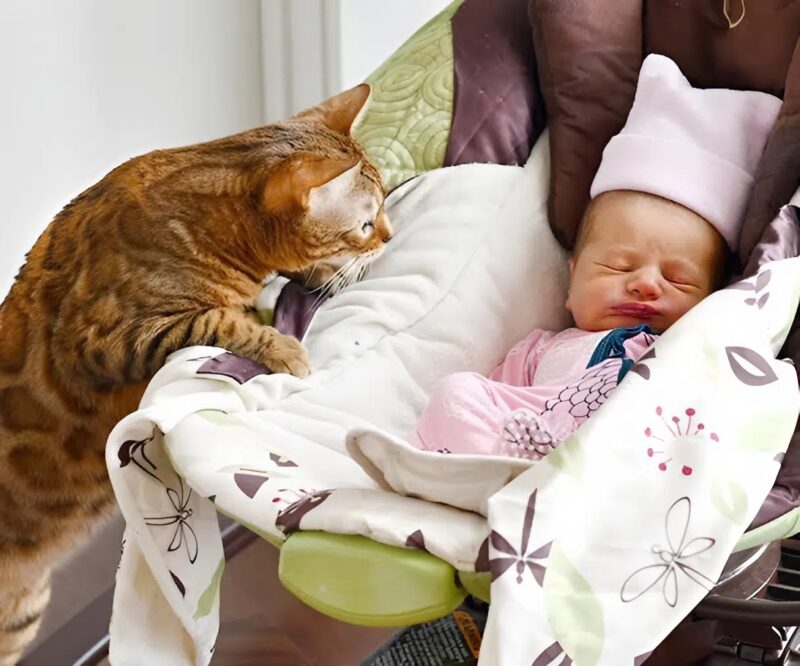
During the first few days, Oliver behaved cautiously. He sat outside the nursery, watching me rock Lily to sleep. Sometimes, he would quietly approach the crib and sniff the blanket before walking away. He never hissed or showed aggression. In fact, he seemed fascinated by the tiny human who had suddenly become the center of our world. 🍼🐈
I began to relax.
One sunny afternoon, I was sitting on the sofa with Lily resting in my arms. Oliver jumped beside me and gently rubbed his head against my shoulder. I smiled, thinking how wonderful it was that he was accepting the new member of our family.
Then something happened that I would never forget.
As I leaned forward to adjust Lily’s blanket, Oliver moved closer and briefly licked her forehead.
“Oliver, no!” I exclaimed, immediately pulling him away.
It happened so quickly that I barely had time to react. I wiped Lily’s forehead with a clean cloth and washed my hands, convinced that everything was fine. After all, it had been only a tiny lick. Surely, nothing serious could come from such a small moment?
But three days later, my confidence disappeared. 😰
Lily became unusually irritable. She cried more than usual, refused to feed properly, and felt warmer than she had the day before. At first, I thought she was simply having a difficult day. However, when I noticed that she was becoming increasingly sleepy and difficult to comfort, fear swept through me.
I checked her temperature and immediately called her pediatrician.
“Because she’s a newborn and has these symptoms, she needs urgent medical evaluation,” the doctor told me firmly.
My hands began to shake. I wrapped Lily in a blanket and rushed to the hospital with my husband. 🚑
The doctors examined her immediately and ordered several tests. We waited anxiously while nurses moved in and out of the room. I couldn’t stop looking at my daughter’s tiny face, wondering what had happened to my previously healthy baby.
Finally, a doctor returned with a serious expression.
“Your daughter has an infection,” she explained. “We are investigating the cause and have started the treatment she needs.”
My heart sank.
When the doctor asked whether Lily had recently been exposed to animals, I hesitated before telling her about Oliver licking the baby’s forehead.
The doctor explained that cats can carry germs, including bacteria that may cause infections in certain circumstances. Although a lick doesn’t automatically cause an infection, contact with an animal’s saliva can pose a risk, especially for a newborn whose immune system is still developing.
I felt tears rolling down my cheeks. 😭
“Is this my fault?” I whispered.
The doctor gently reassured me that we couldn’t assume the cat had caused the infection without further evidence. She explained that newborn infections can have many causes and that identifying the source requires medical investigation.
Nevertheless, I couldn’t stop blaming myself for ignoring the warnings.
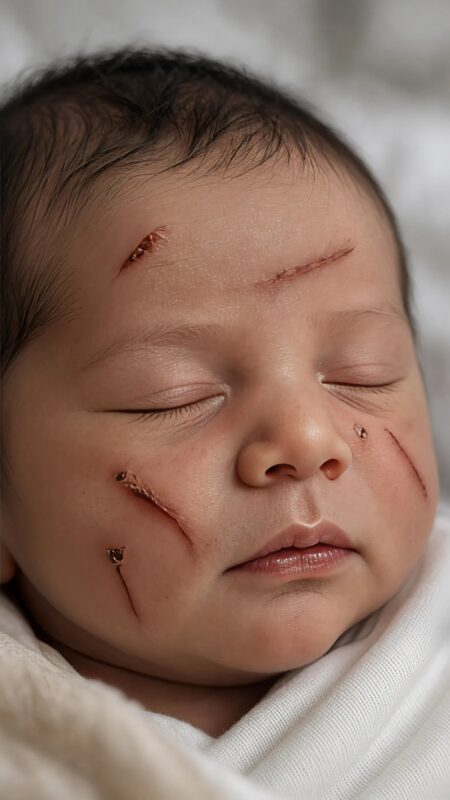
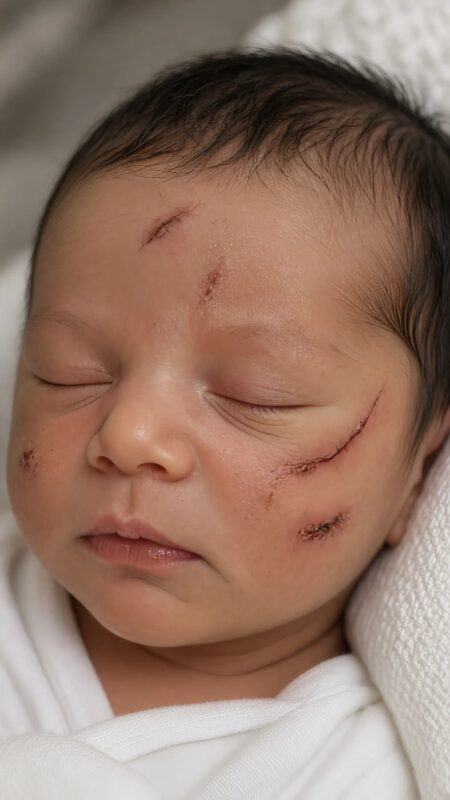
For the next several days, Lily remained under close medical supervision. She received the treatment recommended by her doctors, and every small improvement felt like a miracle. ❤️🙏
Eventually, her condition began to improve. She started feeding better, her temperature returned to normal, and her familiar little cries gradually became less distressing.
When the doctor finally told us that Lily was recovering well enough to go home, my husband hugged me tightly. We both cried with relief.
But our experience changed the way we approached life with Oliver.
We didn’t abandon him or stop loving him. Instead, we learned to establish safe boundaries. We never allowed him to lick Lily’s face, kept him away from her sleeping space, maintained careful hygiene, and arranged veterinary care. We also made sure every interaction was supervised.
Today, whenever I see Oliver sitting peacefully near Lily’s play mat while she watches him curiously, I remember how quickly an ordinary moment can become frightening. 🐱👶❤️
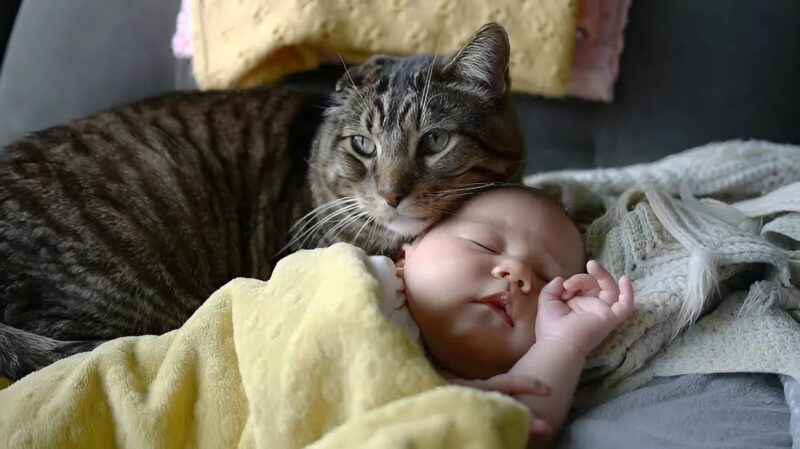
I still believe children and pets can grow up together and develop wonderful bonds. But love must go hand in hand with responsibility.
If there’s one lesson I learned, it’s this: never confuse a loving animal with a risk-free environment. A pet can be gentle and affectionate while still carrying germs that may be dangerous to a newborn.
And if your baby develops a fever, poor feeding, unusual sleepiness, or other concerning symptoms, seek urgent medical care rather than waiting to see whether things improve.
Because sometimes, protecting the people we love means listening to warnings before we learn their importance the hardest way possible. 💕